Bamboo vs Leylandii: Comparing Root Problems & Removal
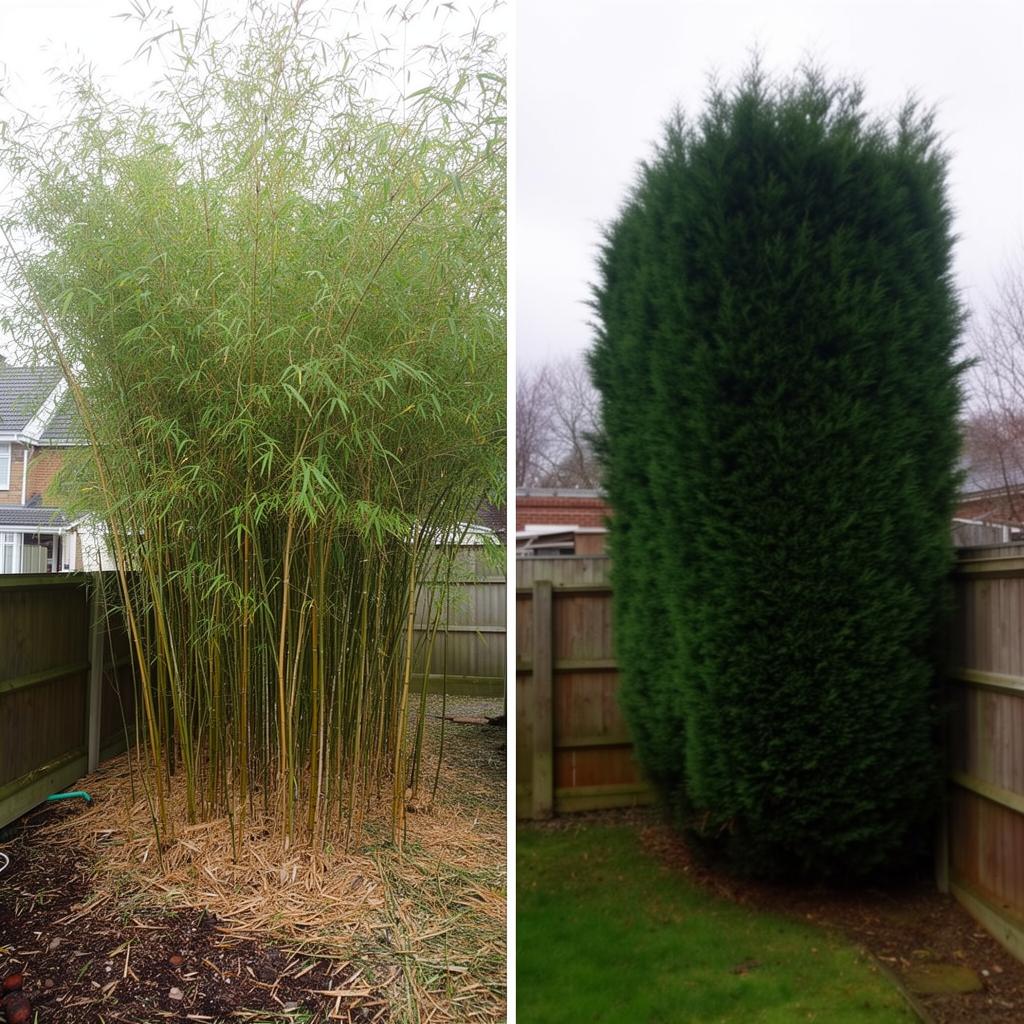
| Factor | Bamboo | Leylandii |
|---|---|---|
| Root type | Invasive spreading rhizomes | Deep tap root with lateral roots |
| Primary complaint | Underground spread into neighbours | Height blocking light, root damage |
| Legal framework | Common law nuisance | High Hedges Act 2005 (England) / Anti-social Behaviour Act |
| Containment | Root barriers (limited effectiveness) | Regular trimming maintains size |
| Removal cost | £1,500–£15,000+ | £500–£5,000 |
| Root damage potential | Very high — cracks structures | Moderate — subsidence risk in clay soils |
Overview
Bamboo and leylandii (Leyland cypress) are both prolific sources of neighbour disputes in the UK. Leylandii's rapid height growth blocks light and views, while bamboo's underground spread invades neighbouring gardens. Both can cause property damage through their root systems, but in very different ways.
Root System Comparison
Bamboo spreads through horizontal rhizomes that travel laterally at 15–60cm depth. These rhizomes are independent — they can survive and regenerate far from the parent plant. The spread is aggressive and unpredictable.
Leylandii develops a deep tap root system with lateral roots extending roughly to the canopy drip line. In clay soils, leylandii roots can cause subsidence by extracting large volumes of moisture, leading to ground shrinkage. However, the roots don't send out independent runners like bamboo.
Legal Issues
Leylandii is specifically addressed by the High Hedges Act 2005 (England and Wales), which allows councils to issue remedial notices requiring hedge owners to reduce height. This provides a clear legal remedy for affected neighbours.
Bamboo has no specific legislation and is not listed under the Wildlife and Countryside Act 1981 or the Invasive Alien Species Order 2019. Affected parties can bring a civil claim in private nuisance or encroachment instead, which is decided case by case rather than under a fixed statutory remedy. Independent legal advice is the sensible starting point.
Removal & Costs
Bamboo removal requires complete rhizome excavation — a major undertaking involving machinery and soil screening. Costs: £1,500–£15,000+.
Leylandii removal involves felling the trees and grinding stumps. While large specimens require specialist tree surgeons, the process is straightforward compared to bamboo. Costs: £500–£5,000 depending on size and number of trees.
The Verdict
Both plants are significant nuisance plants, but bamboo is the harder problem to solve. Leylandii can be managed through regular trimming and has clear legal remedies. Bamboo, once established, requires professional intervention and is far more likely to cause hidden structural damage through its underground spread.
Our Expert Verdict
Both plants cause significant neighbour disputes, but bamboo is harder to contain and remove. Leylandii is covered by the High Hedges Act, while bamboo currently has fewer specific regulations.
Need professional bamboo removal?
Free, no-obligation site assessments across South Wales.
Call 07582 869979Frequently Asked Questions
Related Articles
The History of Bamboo in the UK: How an Exotic Plant Became a Property Nightmare
Bamboo first arrived in British gardens during the Victorian plant-hunting era. What was once a prized exotic specimen has become one of the most problematic invasive plants in UK properties.
Japanese Knotweed vs Bamboo: Which Is Worse for Your Property?
Both Japanese knotweed and bamboo are invasive plants that can devastate UK properties. But which poses the greater threat? We compare the two side by side.
How Much Does Bamboo Removal Cost in the UK? 2026 Price Guide
Bamboo removal costs vary significantly based on the size of the infestation, access, and method used. Our comprehensive 2026 price guide breaks down what you can expect to pay.
Related Guides
More Comparisons
Sources
- RHS — Bamboo growing guideSpecies behaviour, running vs clumping habit and containment advice.
- Property Care Association — Invasive weed controlIndustry standards for surveys, management plans and insurance-backed guarantees.
- GOV.UK — Prevent harmful weeds and invasive plants spreadingWhich plants are subject to statutory control in England and Wales.
- HSE — PesticidesLegal requirements for professional herbicide use and operator certification.
- GOV.UK — How to resolve neighbour disputesThe recommended order of steps before any formal or legal action.
- Anti-social Behaviour, Crime and Policing Act 2014The discretionary Community Protection Notice powers councils may use.
- Wildlife and Countryside Act 1981, Schedule 9The schedule of listed plants — bamboo is not listed on it.
Limitations of this page
- Written from our own survey and removal work in South Wales together with the published guidance above. It is general information, not a site-specific assessment.
- Bamboo behaviour varies by species, ground conditions, planting age and how the plant has been managed, so figures given here are illustrative rather than predictive.
- Any cost, timescale or guarantee figure is an indicative range. Eligibility, term and exclusions for a guarantee depend on the method used and the site.
- Nothing here is legal advice. Boundary and damage questions are civil matters and depend on your circumstances — take independent legal advice before acting.
- Running and clumping are descriptions of growth habit, not risk ratings — vigour varies between species, individual plants and sites.
- Whether bamboo is a problem on a given property depends on the species, how far the rhizomes have already travelled, the condition of nearby structures and drains, the ground conditions, and what an assessor can see and access on the day.
- Distances, spread rates and costs given here are illustrative, not thresholds or predictions for your site.
Where We Work
We're a Neath-based team covering South Wales. Popular areas:
See all South Wales coverageNeed Help With Bamboo?
Get a free, no-obligation assessment from our PCA-registered specialists.
Call 07582 869979